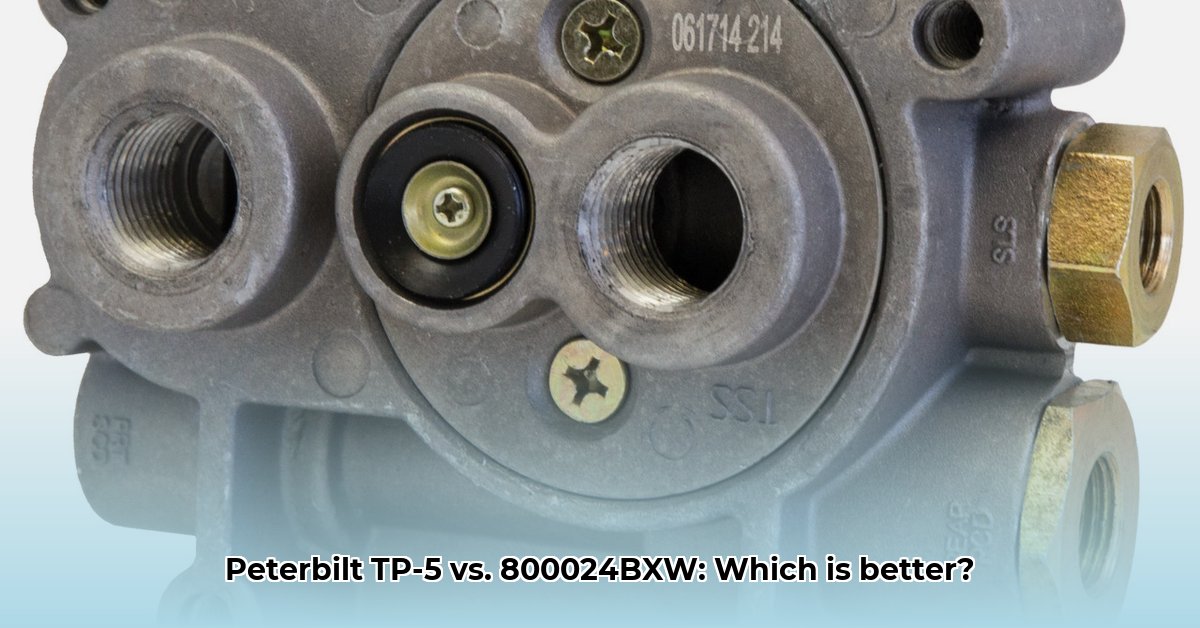
Understanding Tractor Protection Valves in Peterbilt Trucks
Maintaining a safe and reliable braking system is paramount for any Peterbilt operator. Tractor protection valves (TPVs) are crucial safety components that prevent complete air loss in the event of a trailer disconnection or a significant leak in the air brake system. This guide details the Bendix TP-5 and 800024BXW TPVs, comparing their functionality, installation, and maintenance. Understanding these differences will help you choose the right valve for your specific needs and ensure optimal brake system performance. For more in-depth information, check out this helpful resource.
Core Functionality: TP-5 and 800024BXW Comparison
Both the Bendix TP-5 and the 800024BXW (often a functionally equivalent valve from a different manufacturer) serve the same fundamental purpose: to maintain braking system pressure in the event of a trailer separation or air leak. They achieve this by automatically closing a valve, preventing the loss of air from the tractor's brake system.
Detailed Comparison: TP-5 vs. 800024BXW
While both valves perform the same critical function, significant differences exist in their design, installation, and maintenance requirements.
Porting and Connections
A crucial difference lies in the specific port sizes and configurations on each valve. The TP-5 and 800024BXW may have varying port locations and thread types. Before purchasing, carefully compare these specifications with your Peterbilt's air system diagram to ensure compatibility. Incorrect valve selection could lead to leaks and compromise braking system integrity. Incorrectly sized or positioned ports can lead to air leaks, potentially compromising braking capability and safety. Always double-check your existing setup and the valve's specifications against your truck model.
Mounting and Installation
The recommended mounting location can differ between valves. The 800024BXW often suggests rear cab mounting for aesthetic reasons, but accessibility for maintenance should also be a primary factor. The TP-5 offers more mounting flexibility depending on your truck's specific configuration. Installation steps are generally similar but may vary slightly due to different bracket designs and port locations. Remember: Consult your Peterbilt's service manual for precise instructions and diagrams specific to your truck model.
TP-5 Installation (General Steps):
- Disconnect air lines from the existing valve (if applicable).
- Mount the TP-5 in the designated location (consult your truck's manual).
- Securely connect air lines, ensuring air-tight seals.
- Conduct a thorough leak test using soapy water.
800024BXW Installation (General Steps):
- Securely attach the mounting bracket to the designated area (usually at the rear of the cab).
- Mount the 800024BXW valve onto the bracket.
- Connect all air lines, carefully verifying the connections are secure and leak-free.
- Perform an exhaustive leak test with soapy water.
Troubleshooting
Diagnosing problems quickly is essential with air brakes. While troubleshooting steps are generally similar for both valves (check for leaks in the lines, connections, and the valve itself), consult your service manual for detailed, model-specific procedures. Always prioritize safety and contact a qualified technician if you are unsure.
Maintenance
Regular preventative maintenance is crucial. This includes regular visual inspections of air lines for wear, ensuring all connections are tight, and performing periodic leak checks with soapy water. Ignoring maintenance may lead to significant problems and costly repairs.
Remanufactured vs. New: A Cost-Benefit Analysis
The decision between purchasing a new or remanufactured valve often comes down to budget constraints. While remanufactured valves offer lower upfront costs, they may have shorter warranties and potentially lower reliability. Before making a decision, carefully weigh the potential cost savings against the reduced warranty and potential for earlier replacement.
New Valve Advantages:
- Longer warranty periods
- Guaranteed reliability and performance
- Use of new components
Remanufactured Valve Advantages:
- Lower cost
Conclusion: Selecting the Right Valve for Your Peterbilt
The optimal valve choice depends entirely on individual needs and truck configuration. Factors including budget, required warranty coverage, ease of maintenance access, and port compatibility must be considered. Always prioritize safety and ensure compatibility with your specific Peterbilt model before purchasing or installing either the Bendix TP-5 or the 800024BXW tractor protection valve. Proper installation and regular maintenance will help ensure efficient and safe operation of your air brake system.